Projects
Things I have built, mostly with other people.
Sensor placement for fatigue monitoring
Where to put sensors on a large structure under test, so that damage is observable at all.
2026High Tech SystemsMIMIC
Hardware that moves a real mouse, trained on human movement. Nothing runs on the host computer.
MIMIC
Hardware that moves a real mouse, trained on human movement. Nothing runs on the host computer.
The host machine sees an ordinary mouse moving; everything else happens on the desk. Movement is learned from recorded human traces, so the paths look like a person's rather than generated ones.
- Vision
- Screen state read externally, no host-side hooks.
- Sequence
- Sequence model over recorded human traces.
- Actuation
- Two degrees of freedom, calibrated to the desk.
2026Medical AIBeyond Black Boxes
A chest X-ray classifier that shows where it looked and how sure it is.
Beyond Black Boxes
A chest X-ray classifier that shows where it looked and how sure it is.
Accuracy alone says nothing about a single case. Every prediction carries a confidence and the region it was read from, so the failures can be seen rather than averaged away.
- R-Net
- Residual backbone over the radiograph.
- Focal loss
- The findings are rare and the classes badly unbalanced.
- AdamW
- Decoupled weight decay for fine-tuning.
2026Crowd dynamicsDetecting phase-like states in pedestrian crowds
Whether a busy train platform can be described with physical phases. Mostly it cannot, and where it breaks is the interesting part.
Detecting phase-like states in pedestrian crowds
Whether a busy train platform can be described with physical phases. Mostly it cannot, and where it breaks is the interesting part.
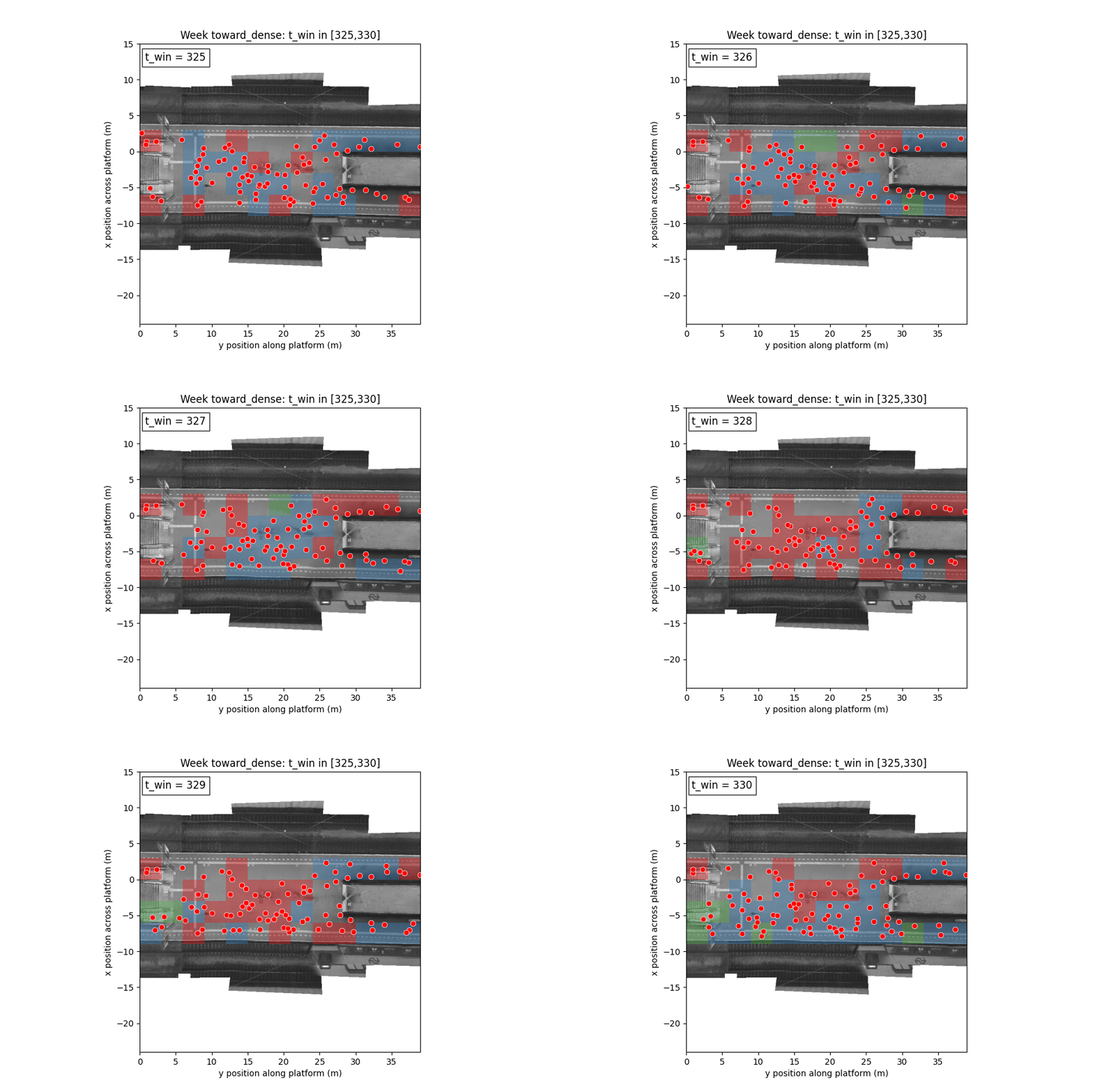
A week of LiDAR trajectories from Eindhoven Centraal platform 2.1, cut into 3 m × 3 m cells over 5-second windows and clustered without labels. Of five features, only density and mean velocity order the way physical phases predict, and the states sit close together — real, but not cleanly separated.
- Filtering
- Savitzky–Golay smoothing, then a physics filter for LiDAR identity switches and Kalman drift.
- Cells
- 3 m × 3 m over 5 s, walkable floor only.
- Clustering
- Gaussian mixture, K = 4, on four z-scored features; flow excluded as density × speed.
2026Autonomous SystemsDigital Twinning
A farm robot in simulation with a live twin beside it, mirroring its state as it drives.
Digital Twinning
A farm robot in simulation with a live twin beside it, mirroring its state as it drives.
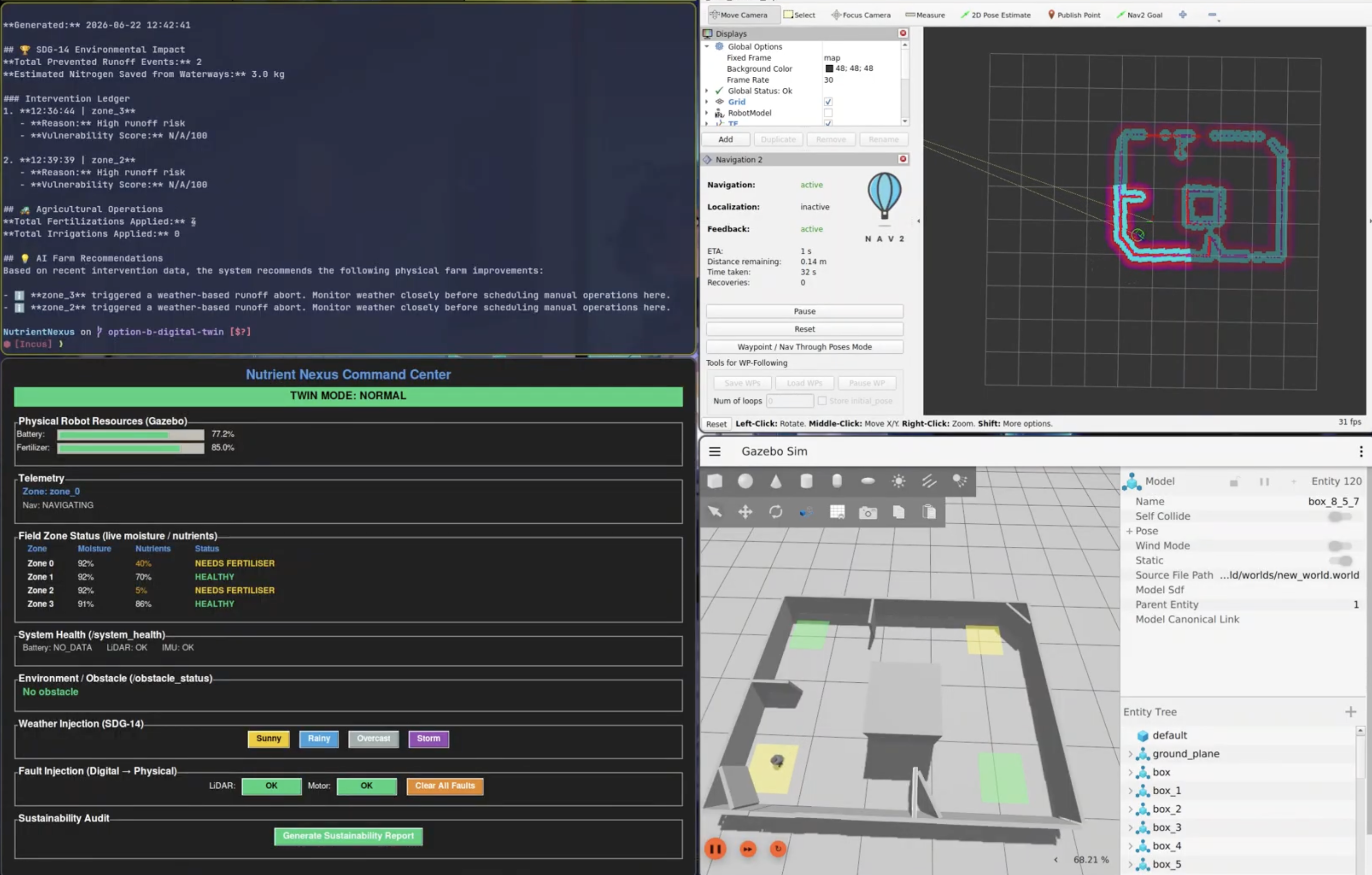
A TurtleBot3 drives a simulated field while a command centre mirrors zone moisture, nutrients, battery and fertiliser. Weather and faults are injected from the twin to see what the robot does about them.
- ROS 2
- Nodes for zone detection, crop decisions, resources, and the twin supervisor.
- Gazebo · Nav2
- Simulated field, SLAM, and navigation between zones.
- Dashboard
- Live telemetry, plus weather and fault injection from twin to robot.
2026Software DesignFocusFlow
A Pomodoro tracker in Java that ties every session to a task.
FocusFlow
A Pomodoro tracker in Java that ties every session to a task.
A session cannot exist without a task, so the record afterwards says what the time went into, not just how much of it there was.
- JavaFX
- Desktop UI.
- Repository
- Persistence behind one interface.
- Facade
- One entry point over the services.